
Quick answer
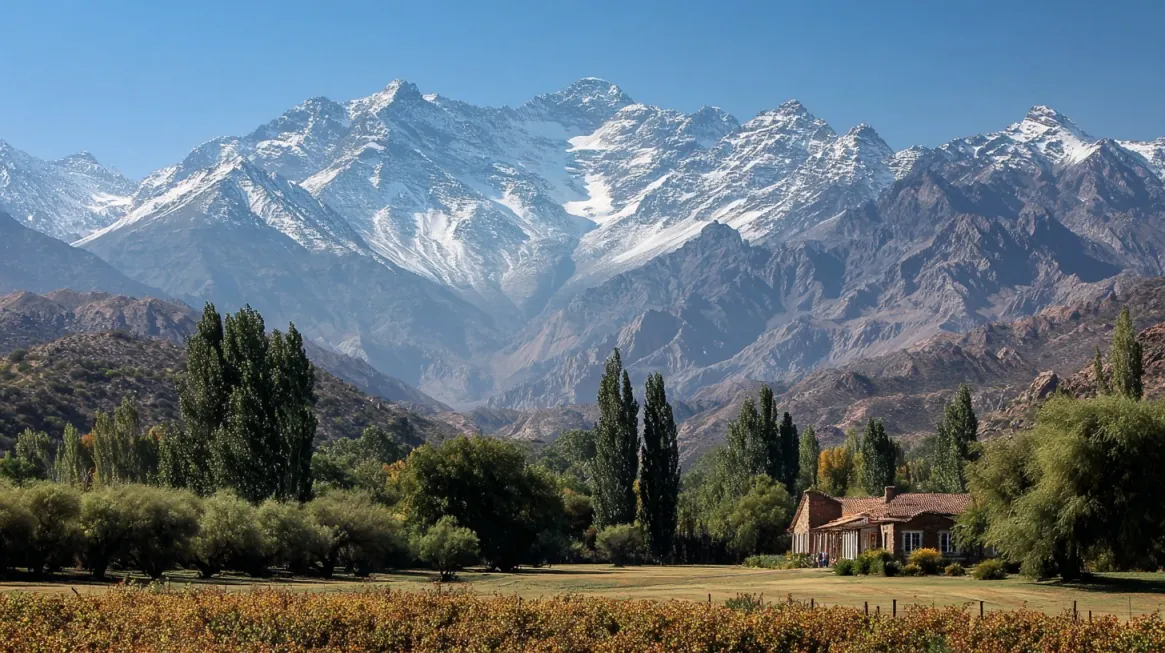
Does it snow in Mendoza Argentina? Yes, substantially—but geography determines everything. The city of Mendoza (760m elevation) sees snow perhaps once per decade. The High Andes passes above 2,500 meters receive consistent heavy snowfall from late May through early October, with peak accumulation in July. Ruta 7 toward the Chilean border closes frequently during winter storms, and mountain refuges become inaccessible without specialized equipment.
The Andes cordillera above Mendoza receives between 3 and 7 meters of snow annually, concentrated in the austral winter months. This snowpack feeds the region's water supply and sustains its famous viticulture, but it also isolates high-elevation sites and complicates cross-border logistics. The contrast between Mendoza's arid valley floor and the alpine conditions 100 kilometers west defines the province's climate paradox. Snowfall begins in earnest around late May, when cold fronts from the Pacific slam into the western slopes. By mid-June, routes above Uspallata frequently require chains, and passes like Cristo Redentor become impassable until spring. The heaviest storms arrive in July and August, when polar air masses stall over the cordillera and dump 40 to 80 centimeters in single events. These closures are not scenic inconveniences—they strand vehicles, cut off mountain communities, and demand respect from anyone planning high-altitude travel during those months. Spring melt begins in September but proceeds slowly. Even in early November, shaded switchbacks above Puente del Inca hold patchy ice, and afternoon sun can trigger rockfall from thawing cliffs. Road crews work around the clock during the transition, but conditions remain unpredictable. The question of whether Mendoza gets snow is better framed as a question of altitude: below 1,500 meters, almost never; between 1,500 and 2,500 meters, occasionally in strong storms; above 2,500 meters, reliably and heavily from June onward. Visitors drawn to the High Andes in winter should monitor Vialidad Nacional reports and carry emergency supplies even on clear days. Weather systems develop rapidly in the cordillera, and what begins as light flurries at Potrerillos can become whiteout conditions at Penitentes within an hour. The mountains dictate the timetable, not the calendar, and no amount of planning overrides the reality of a closed pass. Understanding Mendoza's snow means understanding that the Andes are a living weather engine, not a static backdrop.
“The question of whether Mendoza gets snow is better framed as a question of altitude: below 1,500 meters, almost never; above 2,500 meters, reliably and heavily from June onward.”
Does It Snow In Mendoza Argentina: Seasonal Weather Patterns
The High Mountain region experiences significant snowfall primarily between June and September. For the safest and most visible transit through the Andes, travelers should plan their journey within the 08:00–12:00 arrival window.
June to September
High for snow seekersFrequent snowfall, 0°C to 5°C
This period offers the highest probability of snow in the Andes. Roads may require snow chains during this time.
October to November
ModerateVariable, 5°C to 15°C
Spring weather begins to thaw the routes. Snow remains at higher elevations, though road conditions stabilize.
December to March
LowDry and sunny, 15°C to 25°C
Snow is absent from the lower passes during these summer months. This is the period for clear, high-altitude mountain trekking.
Weekday mornings
Low—
Arriving between 08:00 and 12:00 ensures better visibility before afternoon mountain shadows decrease light and road safety.
Verdict: The best time to visit for guaranteed snow is mid-winter, specifically July or August, arriving between 08:00 and 12:00 on weekdays to avoid mountain shadows.
Navigating To The Andes When It Snows In Mendoza Argentina
The High Mountain region is accessed via Ruta Nacional 7, which winds west from Mendoza city center toward the Chilean border. Travelers should prioritize monitoring real-time road status reports before departure, as winter snow conditions frequently necessitate the use of tire chains and four-wheel-drive vehicles.
Ruta Nacional 7 from Mendoza
Terminal de Ómnibus de Mendoza to Uspallata
Interesting Facts About Does It Snow In Mendoza Argentina
The Andes Mountains act as a significant orographic barrier that dictates the distinct climatic contrast between the arid Mendoza valley and the high-altitude snow zones. This physical wall forces moisture-laden air to rise and condense, resulting in heavy snowfall on the peaks while leaving the lowlands relatively dry.
Rain shadow effect
The Andes block Pacific moisture, causing clouds to release precipitation as snow at higher altitudes while the eastern plains remain arid.
6,961 meters peak elevation
Aconcagua, the highest mountain outside of Asia, sits within this range and maintains permanent snowfields near its summit.
Orographic lift dynamics
Air masses forced upward by the mountain barrier cool rapidly, leading to frequent snow events in the High Mountain region.
Arid valley climate
Mendoza city receives minimal annual precipitation because the moisture is intercepted by the western slopes of the Andes.
Atmospheric pressure differences
Lower pressure at higher elevations in the Andes contributes to the maintenance of snowpack throughout colder months.
Temperature gradients
For every 1,000 meters of elevation gain, temperatures typically drop by approximately 6.5 degrees Celsius, facilitating snow accumulation.
Preparation Checklist For Visiting When It Snows In Mendoza Argentina
Winter conditions in the High Andes require specific gear and preparation to ensure safe mountain travel.
-
Carry tire chains in your vehicle — Mandatory for snow and ice on Ruta Nacional 7 mountain passes.
-
Bring layered cold-weather clothing — Temperatures drop significantly at altitude, especially in shadow zones.
-
Pack sufficient water and snacks — Services are sparse along high-altitude mountain routes.
-
Fill fuel tank before ascending — Gas stations are limited in the Andes corridor.
-
Check road conditions before departure — Snow closures and avalanche risk can halt access without notice.
-
Carry a charged phone and power bank — Cell coverage is unreliable in remote mountain sections.
Opening Hours For The Andes High Mountain Access
The Andes High Mountain access routes located along Ruta Nacional 7 remain open to the public throughout the week.
| Monday | 00:00–23:59 | |
|---|---|---|
| Tuesday | 00:00–23:59 | |
| Wednesday | 00:00–23:59 | |
| Thursday | 00:00–23:59 | |
| Friday | 00:00–23:59 | |
| Saturday | 00:00–23:59 | |
| Sunday | 00:00–23:59 |
Check availability
Common questions about does it snow in mendoza argentina
Everything you need to know about does it snow in mendoza argentina